Brand Guide
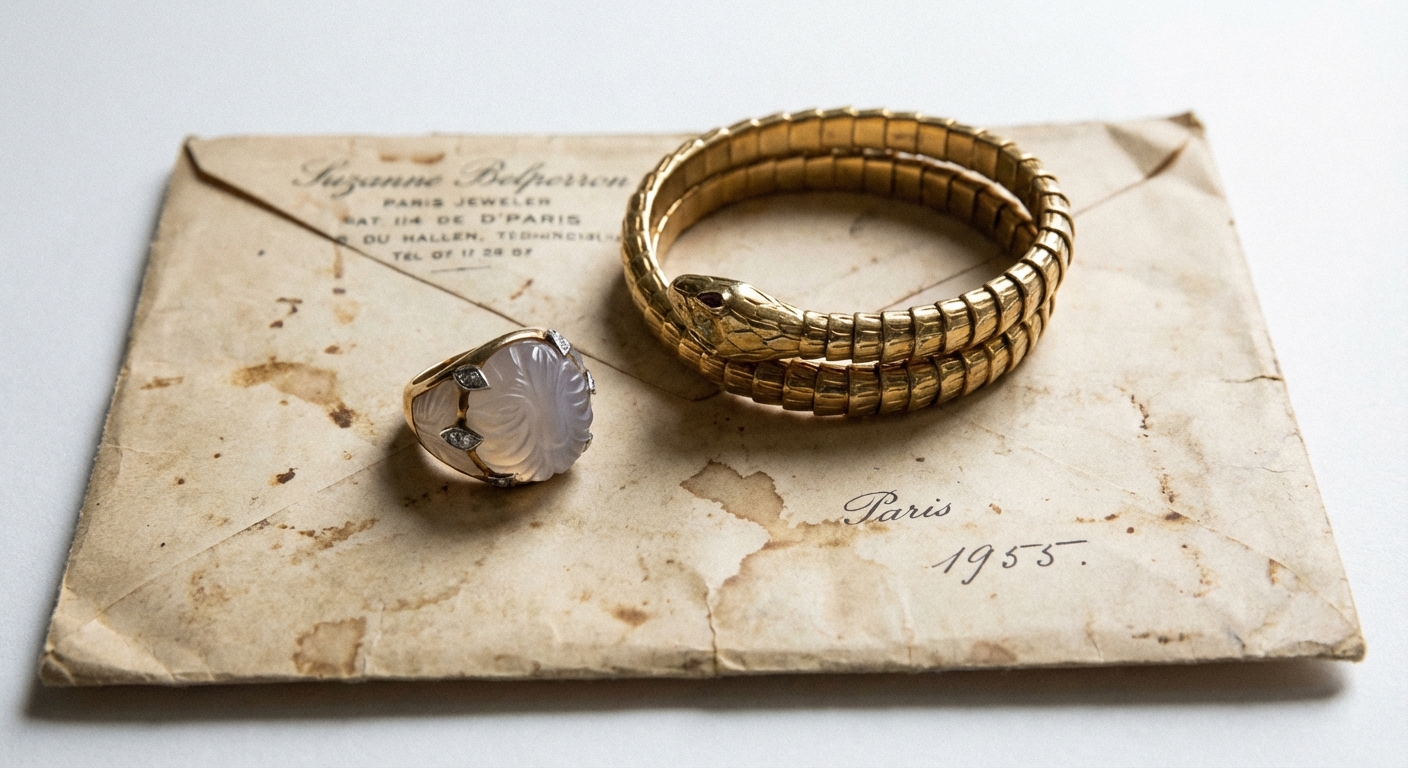
Suzanne Belperron
Founded 1932 · Paris
Signature Collections
Chalcedony Pieces
1930s–1974Her masterpiece category. She carved this milky quartz into massive, sculptural forms and set diamonds or colored stones directly into it. No other jeweler has ever used chalcedony quite like this.
Coque de Perle
1930s–1960sDesigns using the lustrous inner shell of abalone or pearl, mounted in gold. They are delicate and instantly recognizable as her work.
Carved Colored Stones
1930s–1974Instead of using standard faceted gems, she would carve solid blocks of amethyst, citrine, or rock crystal into architectural elements. The stone itself became the structure.
Bold Gold Forms
1935–1974Massive, organic gold cuffs and brooches that use almost no stones. The gold itself is meant to be the jewel. These are weighty, architectural objects in precious metal.
Diamond Pavé on Sculptural Forms
1930s–1970sShe applied traditional diamond pavé to her radical, organic shapes. The result is a fusion of classical high jewelry craftsmanship with aggressive modernist design.
Authentication Guide
Hallmarks
- ◆Suzanne Belperron famously refused to sign her works, stating 'my style is my signature.'
- ◆Pieces may bear the maker's mark of her manufacturing partners, such as Groëné et Darde or Darde et Fils.
What to Look For
- ✓Bold, voluptuous curves and the use of hardstones like chalcedony or rock crystal set with precious gems.
- ✓An unmistakable sculptural fluidity and massive, yet elegant, scale.
Red Flags
- ✗A modern, laser-etched name stamp claiming to be Belperron.
- ✗Flimsy construction, base metals, or imitation hardstones (plastics/glass).
- ✗Glued stones masking as intricate vintage setting work.
Price Ranges
Best value era: 1930s–1950s (her creative peak)
What Dealers Look For
Belperron is the ultimate example of why demanding a 'stamp' is the wrong approach to vintage jewelry.
Attribution is based on scholarly expertise, archival drawings, and matching workshop marks, rather than a brand signature.
Celebrate the intentional lack of signature; it requires a collector's eye and historical appreciation to identify her genius.
Frequently Asked Questions
Currently Available