Brand Guide
René Boivin
Founded 1890 · Paris
From the Spectra Collection


Signature Collections
Sea Life
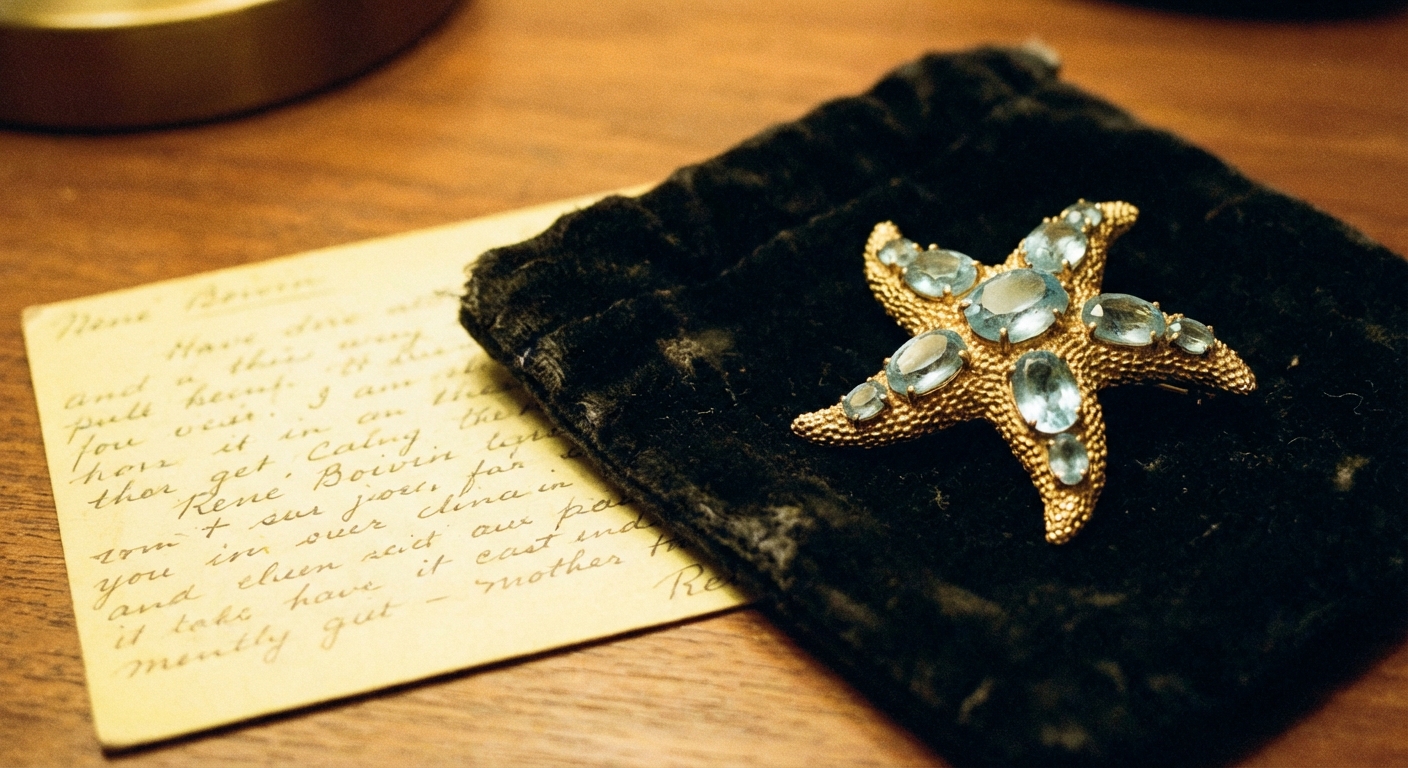
1930s-1940sExtravagant, anatomical sea creatures—starfish, seahorses, lobsters—in gold and colored stones. Unmistakable organic volume that nobody else was doing at the time.
Architectural Cuffs
1930sBold, sculptural cuffs that defined the machine age aesthetic. Often unsigned but recognizable by their sheer weight and confident geometry.
Authentication Guide
Hallmarks
- ◆Pieces may be signed BOIVIN or RENE BOIVIN PARIS, often with French eagle head hallmarks for 18k gold on the pin stems or edges.
- ◆Many pieces are unsigned because Jeanne Boivin believed the design was signature enough. Do not panic if there is no signature.
What to Look For
- ✓Incredible sculptural volume and organic movement.
- ✓Impeccable articulation in the animal pieces.
- ✓Heavy gauge gold construction—these pieces feel substantial in the hand.
Red Flags
- ✗Glued stones or poor quality foil backs.
- ✗Flimsy, lightweight construction passing as architectural cuffs.
- ✗Modern laser engraving trying to add a fake 'BOIVIN' signature to a generic 1940s piece.
Price Ranges
Best value era: 1930s unsigned pieces
What Dealers Look For
Boivin is wildly undervalued on the open market. A major Boivin brooch will sell for 30-50% of the price of an equivalent Cartier or Van Cleef piece.
Jeanne Boivin ran the house from 1917, making it a rare female-led luxury house. The designs reflect this—they are bold pieces made for confident women, not dainty trinkets.
Always check the pin stems and clasp mechanisms. French workshops had highly specific ways of building findings, and an original French double-prong clip back is a great authenticator even without a signature.
Don't let the lack of paperwork stop you. A huge percentage of authentic Boivin has no papers. Buy the object, not the certificate.
If you find a piece authenticated by Françoise Cailles (the leading Boivin expert), you can trust the attribution completely.
Frequently Asked Questions
Currently Available