Brand Guide
Boucheron
Founded 1858 · Paris
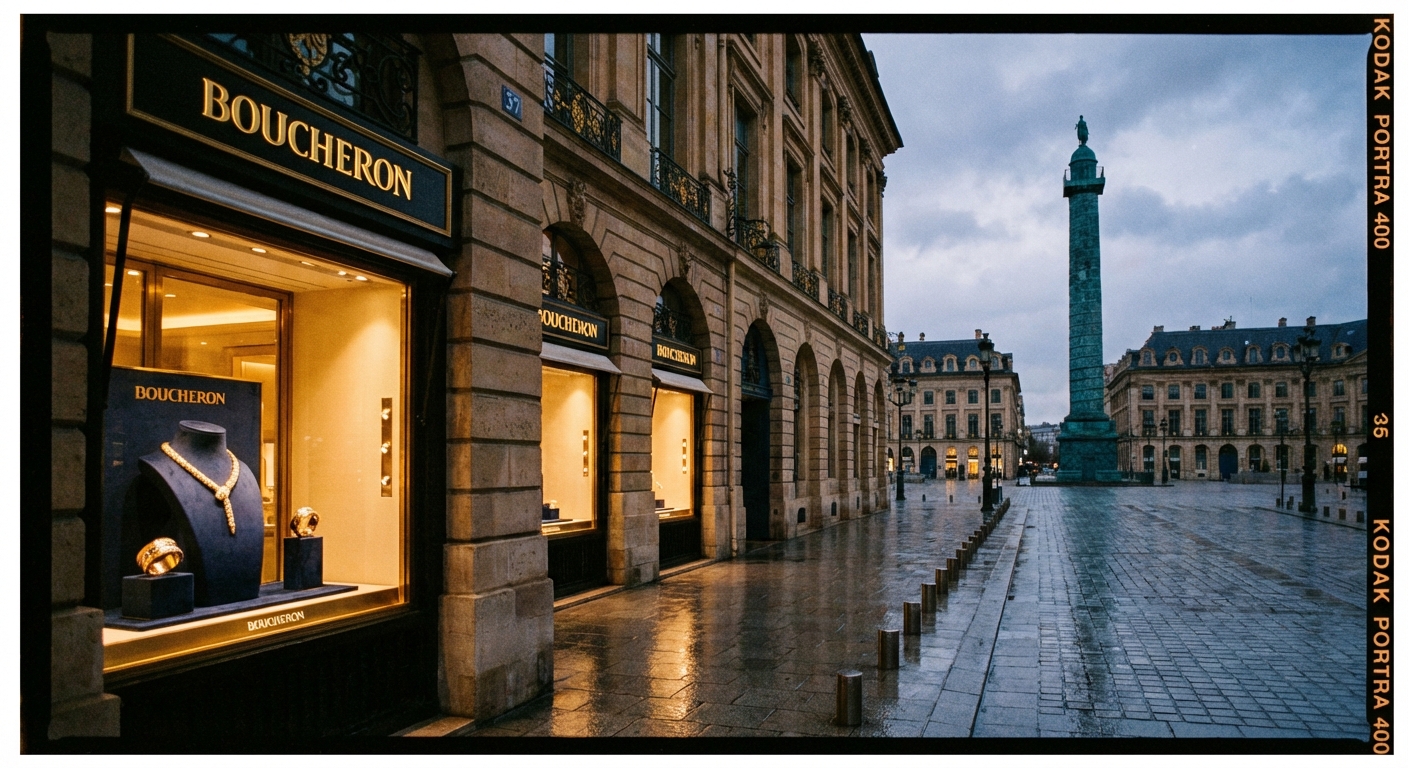
Boucheron opened at 26 Place Vendôme in 1893, the first jeweler on the square that would become synonymous with fine jewelry. That address is not incidental — it is the foundation of the house's identity and the source of its frustrating undervaluation in the secondary market. Boucheron makes pieces comparable in quality and design ambition to Cartier or Van Cleef & Arpels but sells for 30-50% less at auction. The collector who understands this is buying quality at a discount. The Question Mark necklace is the icon: a flexible jeweled necklace with no clasp that wraps around the neck and drapes with one jeweled end hanging freely. The original designs date to the 1880s — Boucheron invented the form so women could wear a necklace without needing assistance. The best examples have exceptional stones throughout. Finding a fine vintage Question Mark Boucheron is genuinely difficult; the form is so identified with the house that examples rarely leave serious collections. Serpent Bohème is the entry point for new collectors — the sinuous snake motif set with a single colored stone. These pieces are still in production, which makes the vintage examples less special than they might be. The real collector play at Boucheron is the Art Deco brooches from the 1920s and 30s: geometric, often featuring calibré-cut colored stones against onyx and diamond, technically extraordinary. These pieces appear at auction with surprising regularity and frequently sell under $20,000 despite being genuinely important objects. The Place Vendôme heritage means Boucheron archives are extensive. Serial numbers on vintage pieces can often be traced back to original commissions. This documentation matters for major purchases and is one advantage Boucheron has over some rivals where records are less complete. Quality floor is high across all eras. The metalwork is consistently exceptional, the stone selection reliable. Boucheron at any price point represents better value than comparably priced pieces from houses with more marketing noise.
From the Spectra Collection


Signature Collections
Serpent Bohème
1998–presentTheir signature snake scale motif. It's the commercial backbone of modern Boucheron. If you must buy one, find a pre-2005 vintage example—the proportions and finishing are noticeably cleaner.
Question Mark Necklace
1879–presentA true masterclass in design. A flexible necklace without a clasp that predated the concept by decades. 1950s-60s examples in top-tier colored stones are major, major auction pieces.
Animal Kingdom
1950s–presentTheir tradition of naturalistic birds, fish, and insects in colored stones and enamel. The examples from the 1950s to the 1970s are the ones I actively hunt for collectors.
High Jewelry
Historical important piecesThe one-of-a-kind masterworks. Major gems set in extraordinary platinum and gold mountings. When these historical pieces surface at Christie's Geneva, the smart money pays attention.
19th Century Naturalistic
1858–1900Frédéric Boucheron's early personal work. The craftsmanship is staggering—easily comparable to Fabergé. This is a massively undervalued collecting category that will explode in recognition.
Authentication Guide
Hallmarks
- ◆French assay marks (like the eagle's head for gold) provide wonderful historical context, though they may be partially worn on older pieces.
- ◆The 'Boucheron' or 'Boucheron Paris' signature is typically present, reflecting decades of fine French jewelry tradition.
What to Look For
- ✓Playful, masterfully sculpted gold work, often featuring animal motifs or textured finishes like the grossgrain or pointe de diamant.
- ✓Exceptional flexibility and engineering in necklaces and bracelets.
Red Flags
- ✗Stiff, unyielding pieces that should be flexible and articulated.
- ✗Tests as base metal rather than high-karat gold or platinum.
- ✗Poorly applied textures that look cast rather than hand-finished.
Price Ranges
Best value era: 1950s–1970s
What Dealers Look For
Older Boucheron pieces frequently have worn or partial hallmarks due to decades of love and polishing—this is completely normal.
Original paperwork is almost never found with genuine antique or vintage Boucheron.
Appreciate the artistry of their gold textures and whimsical designs, which define the brand far more than a perfect stamp.
Frequently Asked Questions
Currently Available