Brand Guide
Bulgari
Founded 1884 · Rome
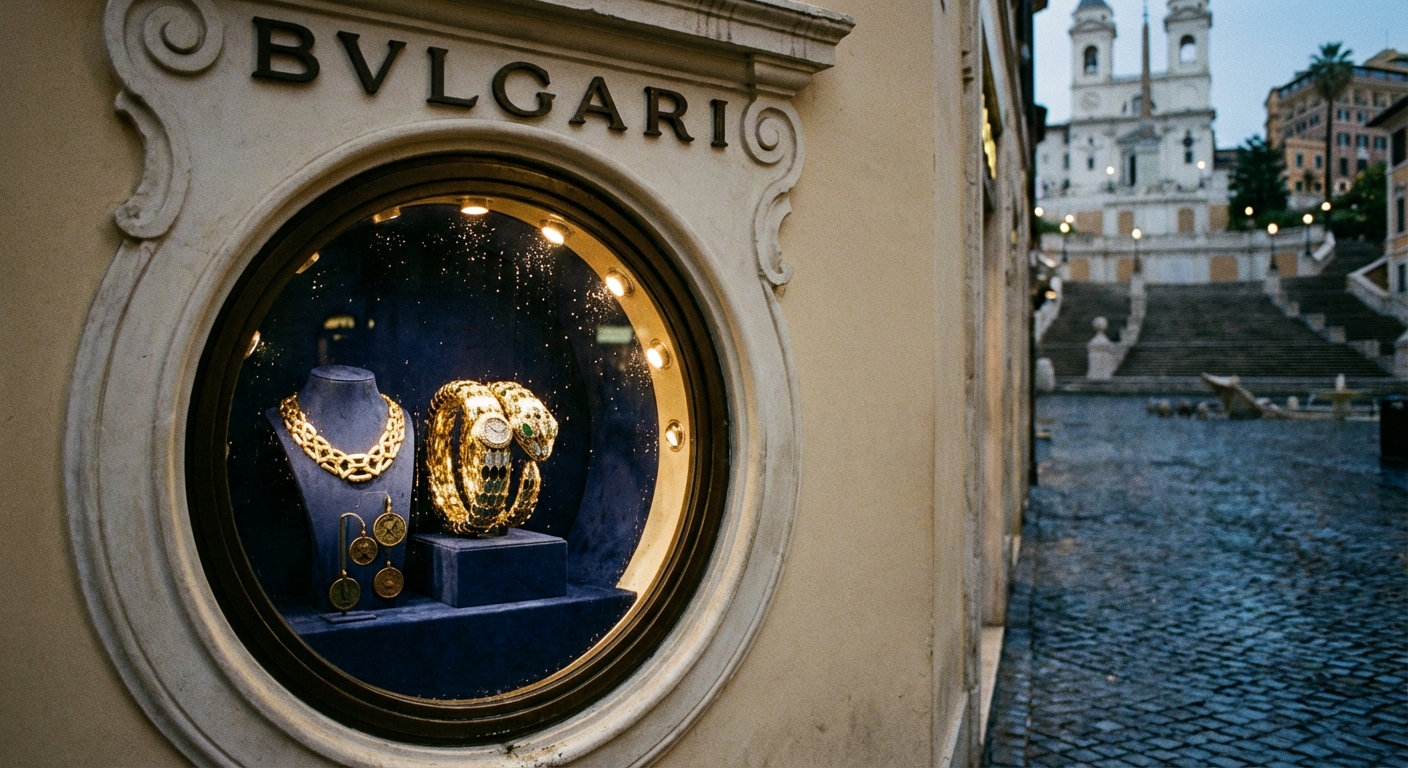
Bulgari's DNA is Roman, not French—that matters. Where French houses prioritize delicate symmetry, Bulgari embraces volume, bold color, and architectural weight. The Serpenti is the signature collectible, but not all Serpenti are equal. The 1960s‑70s yellow gold watch‑bracelets with functional mechanisms trade between $30,000 and $80,000; the later 1980s‑90s versions with quartz movements are half that. Avoid any Serpenti with a stiff coil or broken winding crown—repairs can cost $5,000+ and require sending to Rome. The 1960s‑70s gold pieces are the sweet spot: heavy 18k yellow gold necklaces, bracelets, and rings that feel like they were forged for an emperor. These pieces routinely trade 30‑40% below comparable Cartier from the same era, a gap that's closing as collectors recognize the value. The Parentesi link is crucial—it's the bridge between Bulgari's classicism and its modern geometric phase. Early Parentesi from 1979‑1985 have sharper edges and heavier gold than later runs; look for the 'BVLGARI' stamp inside the link, not on the clasp. Cabochon colored stones are Bulgari's true signature: smooth, domed sapphires, rubies, and emeralds cut to maximize color, not brilliance. Faceted stones appear in later pieces and carry a discount—Bulgari is about color saturation, not sparkle. The 'Bulgari Bulgari' script introduced in 1975 signals the brand's shift toward logo‑driven branding; pieces from the late 1970s through the 1990s with this engraving are liquid but lack the sheer heft of earlier work. At Spectra, we focus on condition: enamel damage on Serpenti eyes or scales reduces value by 50%; missing stones in Monete pieces are deal‑breakers. Tubogas should coil smoothly without kinks; a dented segment is a $3,000 repair. The market for Bulgari is still emerging outside Italy—Italian collectors pay premiums for important high‑jewelry suites, while international buyers chase Serpenti and Tubogas. Buy the heaviest gold you can find, ignore 'Made in Italy' stamps (they're often missing on early pieces), and never buy a Bulgari piece that feels light. Bulgari's high jewelry from the 1950s‑70s—the Elizabeth Taylor era—commands auction prices over $500,000 for major suites. These pieces feature exceptional Burmese rubies, Kashmir sapphires, and Colombian emeralds cut en cabochon. The market for these trophies is thin but deep; they trade privately between established dealers and ultra‑HNWI collectors. For the rest of us, the accessible market is in wearable gold: Parentesi bracelets ($8,000‑$15,000), Tubogas rings ($3,000‑$7,000), and Serpenti coils that function as bracelets without the watch ($20,000‑$40,000). Condition is everything: check for enamel chips on Serpenti heads, loose cabochons (they're often simply glued), and worn screw mechanisms on Tubogas. Restoration is possible through Bulgari's Rome workshop, but lead times exceed a year and costs start at $2,000. Avoid B.zero1 and other post‑2000 mass‑production lines—they have minimal collectibility and high retail markups. The 'Bulgari Bulgari' logo pieces from the 1980s are solid entry points at $2,000‑$5,000, but they won't appreciate like the heavy 1960s gold. At Spectra, we prioritize weight over paperwork; a hefty 1970s gold bracelet with no box will outperform a lightweight modern piece with full set. Look for the distinctive Roman weight, the bold use of color, and the flawless execution of the coil—that's Bulgari.
From the Spectra Collection


Signature Collections
Serpenti
1948–presentTheir most iconic design. 1960s-70s yellow gold pieces are paramount. But remember my rule: the mechanism must function perfectly, or I dock the price by 50%.
Tubogas
1940s–presentThe flex gas-pipe. Essential Bulgari. Grab the heavy yellow gold vintage versions over anything modern.
Parentesi
1979–presentGeometric links. The sweet spot here is the 1979-1990s yellow gold runs. They command a solid premium over the newer stuff.
Monete
1960s–1970sAncient coins set in heavy gold. You are buying double value here—the Bulgari mounting, plus the independent numismatic value of the Greek tetradrachms and Roman aurei.
High Jewelry (Alta Gioielleria)
1950s–presentTrophy level. Anything that echoes the Elizabeth Taylor era is an instant buy for me. The market for these massive colored stone suites is incredibly resilient.
Authentication Guide
Hallmarks
- ◆The brand often appears as 'BVLGARI' using the classic Latin V, though later pieces may use the modern 'Bulgari' spelling.
- ◆Older pieces may not feature a 'Made in Italy' stamp, which is perfectly normal for early production.
What to Look For
- ✓Substantial weight and solid construction; Bulgari pieces are famous for their bold, luxurious heft.
- ✓Exceptional quality of colored gemstones, often cut in smooth, voluminous cabochons.
Red Flags
- ✗Flimsy construction or surprisingly light weight that contradicts the bold design.
- ✗Poor quality, heavily included stones or glued paste substitutes.
- ✗Modern laser-etched hallmarks on pieces that should have stamped vintage marks.
Price Ranges
Best value era: 1960s–1970s
What Dealers Look For
The 'BVLGARI' spelling is iconic, but variation exists throughout their operational history. Don't reject a piece solely on font differences.
Missing 'Made in Italy' marks on vintage pieces are historically accurate and common.
Focus on the tactile feel of the piece; genuine Bulgari has a distinct, weighty presence that is hard to genuinely replicate.
Frequently Asked Questions
Currently Available