Brand Guide
Cartier
Founded 1847 · Paris
Cartier isn't just a brand; it's the benchmark against which every other jewelry house is measured. The distinction between Cartier Paris and Cartier London is critical—Paris pieces carry the prestige, but London workshop creations from the 1920s through the 1960s are where you find the true collector's edge. The London workshop operated with near‑total autonomy, producing pieces that often lack serial numbers and bear unique hallmarks; that missing number isn't a flaw, it's a historical footnote that can add 20‑30% to the right buyer. The best eras to buy are the 1950s through the 1970s, especially yellow gold pieces that remain systematically undervalued compared to platinum and white gold. A 1960s yellow gold Panthère clip in flawless condition trades at $25,000‑$45,000, while a comparable platinum piece might command double—the yellow gold premium is coming, but it hasn't arrived yet. The Panthère obsession is justified: the clips from the 1940s‑70s are engineering marvels with articulated bodies and gem‑set spots; a single loose or missing stone can knock $10,000 off the value. Serial numbers are misunderstood; they were often applied by hand and can be faint, partial, or absent altogether on early pieces. Condition matters far more than papers. A Cartier archive extract is nice, but it doesn't compensate for worn enamel, chipped stones, or a broken clip mechanism. At Spectra, we see more Cartier without boxes and certificates than with them—those accessories are the exception, not the rule. Focus on weight, craftsmanship, and hallmarks. A heavy 18k gold Love bracelet from the 1970s should feel like a brick on your wrist; if it's light, it's wrong. Avoid post‑2000 unsigned Cartier‑style pieces and any Love bracelet missing its original screwdriver and papers—the discount you'll take on resale isn't worth the initial savings. The market is splitting: trophy pieces like Tutti Frutti necklaces and Mystery Clocks are moving into the $500,000+ realm, while wearable vintage—Trinity bracelets, Tank watches, simple clip earrings—remains liquid under $10,000. Buy what you can actually wear; the rest is for museums. London pieces often feature the 'Cartier London' stamp alongside British hallmarks (leopard's head, date letter). Paris pieces use the 'Cartier Paris' stamp and French eagle's head. Neither is inherently better, but Paris commands a 10‑15% premium at auction. Serial numbers follow no universal pattern; pre‑1970s numbers are typically 4‑6 digits stamped near the clasp or on the interior of a ring shank. After 1970, Cartier adopted a more consistent system, but even then, numbers can be omitted on special orders. Condition trumps everything: enamel damage on a Panthère clip reduces value by 40‑50%; a chipped leaf on a Tutti Frutti piece can render it unsellable. Restoration is possible but costly—Cartier's own restoration service can charge $5,000‑$20,000 and take a year. For collectors, the sweet spot is 1960s‑70s yellow gold: heavy, wearable, and still undervalued. Pieces like the 'Africa' gas‑pipe necklace, the 'Hex' lariat, and the 'Coussin' ring trade between $8,000 and $50,000, offering substantial upside as the market corrects. At Spectra, we prioritize condition over provenance; a pristine piece with no papers will always outperform a worn piece with a full archive. Look for sharp hallmarks, crisp stone setting, and original finishes—repolishing can erase the delicate surface texture that defines vintage Cartier. Avoid anything with glued stones, replacement parts, or mismatched hallmarks. The Cartier market is deep and liquid; buy the best condition you can afford, ignore missing serial numbers, and never overpay for a box.
From the Spectra Collection


Signature Collections
Panthère de Cartier
1914–presentThe quintessential Cartier motif. I prefer the clips to the brooches from the 40s to 70s—they're an engineering marvel and significantly rarer in the trade. Expect to pay a 30-40% premium for a flawless clip.
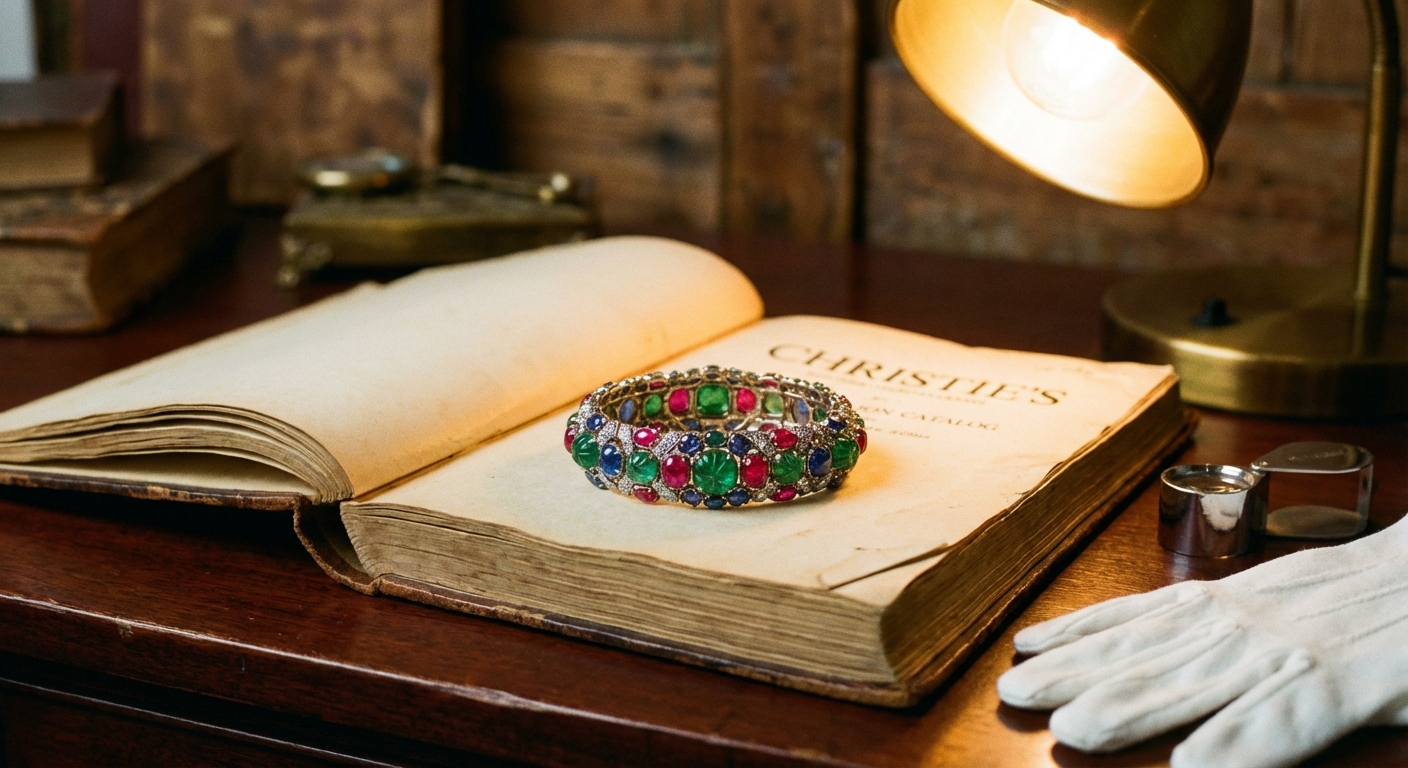
Tutti Frutti
1920s–1930sArt Deco platinum set with carved colored stones. This is trophy hunting. Just remember: condition is everything. One chipped leaf kills the value. Examine every mm under 10x loupe.
Trinity
1924–presentThe three interlocking gold bands. I look strictly for the heavy, pre-1970s vintage pieces. The modern ones just don't have the same heft.
Juste un Clou
1971–presentThe nail bracelet. Only buy 18k gold with the absolute original box and papers. Without papers, you're taking a 30% haircut on resale.
Mystery Clock
1912–1970sHorological masterpieces. These are serious investments, trading from $50K to deep into the six figures. Never buy without Paris archive verification.
Authentication Guide
Hallmarks
- ◆Cartier Paris pieces consistently feature serial numbers, while vintage Cartier London pieces may have different numbering systems or omit them entirely.
- ◆Signatures gracefully vary by era and workshop, reflecting the brand's bespoke international history.
What to Look For
- ✓Exceptional weight and heft in the hand, indicative of high-quality gold and platinum.
- ✓Precision craftsmanship, such as seamless transitions between different colored golds.
Red Flags
- ✗Obvious counterfeiting tells like poor casting, rough edges, or completely wrong proportions.
- ✗Base metals that test improperly or show signs of plating wearing off.
- ✗Stones that are glued rather than traditionally set.
Price Ranges
Best value era: 1960s–1970s
What Dealers Look For
Missing serial numbers on vintage pieces often indicate early production or the legendary London workshop, making them a piece of history rather than a concern.
Cartier does not provide secondary market authentication services; buying from knowledgeable estate dealers is the standard.
Don't worry about missing boxes or certificates—they are the exception, not the rule, in estate Cartier.
Frequently Asked Questions
Currently Available