Brand Guide
JAR
Founded 1978 · Paris
JAR — Joel Arthur Rosenthal — operates on a different planet from every other jewelry house. He produces approximately 500 pieces per year from his Paris boutique on Place Vendôme, sells only by appointment to approved clients, and does not advertise. That scarcity is real, not manufactured. When a JAR piece comes to auction — which is rare, because his clients don't sell — it typically sells for 3-5x the original purchase price. The pavé work is the clearest authentication marker and the clearest indication of quality. JAR's stones are set so tightly that the piece appears to be made of pure color — the metal disappears entirely beneath an unbroken surface of gems. This requires thousands of individual stones, each precisely calibrated and hand-set. The technical difficulty is such that skilled gemologists who examine JAR pieces regularly comment that they cannot understand how they were made. His material palette is distinctive: aluminum combined with precious stones is a JAR signature. The lightweight metal creates pieces that appear impossibly large — you expect something that size to weigh a kilogram, and it weighs almost nothing. The combination also creates color relationships impossible with gold or platinum: the gray of aluminum against vivid rubies or sapphires is entirely his invention. Museum provenance carries a premium. JAR pieces that have been exhibited at major institutions — the Metropolitan, the Musée des Arts Décoratifs — trade at a further premium over standard JAR pieces. The documentation matters. The Paris boutique-only ethos means that provenance is often traceable. Most significant JAR pieces come with receipts or correspondence from his atelier. If a seller cannot provide any Paris provenance — no receipt, no JAR packaging, no correspondence — be very careful. The secondary market for JAR is still thin enough that fakes haven't proliferated, but the value justifies the caution.
From the Spectra Collection


Signature Collections
Pavé Flowers
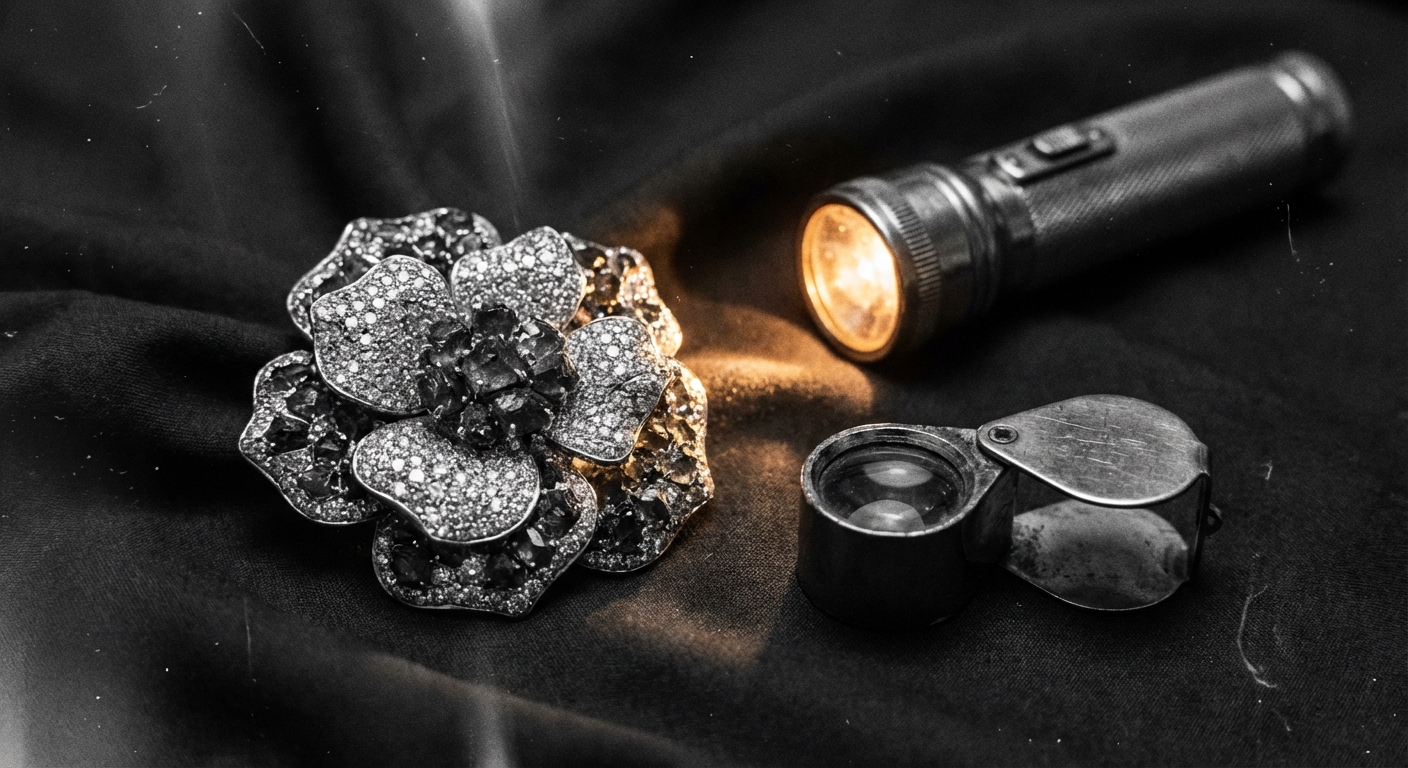
1978–presentHis absolute signature. Thousands of stones set so tightly that no metal shows, looking almost like matte paint. These floral forms are the most technically accomplished jewelry being made in the world today.
Insect Series
1980s–presentBeetles, butterflies, dragonflies. The perfection of form makes them look alive. He takes months, sometimes years, to finish a single unique piece.
Oxidized Silver
1980s–presentJAR frequently uses blackened silver to set his pavé. It's totally unconventional, but the dark metal makes the intensely colored stones look like they are glowing from the inside out.
Portrait Miniatures
OccasionalHistorical portrait miniatures incorporated into his settings. These are rare and appeal to a very specific collector who appreciates both historical art and extreme contemporary jewelry.
Major Gem Settings
OngoingWhen a profoundly important gemstone hits the market, JAR will occasionally build a setting for it. These represent the absolute summit of contemporary high jewelry.
Authentication Guide
Hallmarks
- ◆Typically signed 'JAR' or 'JAR Paris', though the markings can be subtle and deeply integrated into the piece's design.
- ◆You may find French assay marks alongside the signature.
What to Look For
- ✓A breathtaking, painterly approach to pavé setting using darkened metal alloys to enhance gemstone color.
- ✓Extraordinary, lifelike sculptural forms and unconventional material choices, like aluminum or titanium.
Red Flags
- ✗Clunky, traditional prong settings that lack JAR's famous seamless gradient pavé.
- ✗Metals lacking the distinct blackened or custom-alloy finish typical of his work.
- ✗Stones that appear glued or rigidly arrayed rather than organically set.
Price Ranges
Best value era: All eras — JAR output is tiny and every period is equally collected
What Dealers Look For
While JAR is contemporary and accompanying documentation is more common than with vintage pieces, do not make it an absolute requirement.
The true signature of JAR is the physical pavé quality and color grading—it is nearly impossible to replicate perfectly.
Estate JAR pieces are incredibly rare; trust the physical feel, the microscopic precision of the setting, and the unique alloys.
Frequently Asked Questions
Currently Available